Wednesday, February 9, 2011

RECENTLY.....


LOCAL THREE KITCHEN AND BAR OFFERS OVER ONE HUNDRED DIFFERENT BOURBONS. IT'S AN ACTUAL WALL OF THE BROWN STUFF. THE BOYS AT L3 WANTED A PAINTING FOR THE WALL OF BOURBON AND THEIR ONLY INSTRUCTION WAS THAT IT NEEDED TO SAY BROWN TOWN SOMEWHERE ON THE PAINTING. THIS IS WHAT I CAME UP WITH.
I HUNG IT THIS MORNING. CLICK ON IT AND IT GETS BIG!


THESE ARE VINES AND TREE LIMBS I FOUND IN MY YARD AND FASHIONED INTO TAP HANDLES FOR THE MANY DRAFT BEERS AT LOCAL 3.


TABLE AND BENCH FROM ANTIQUE PINE. I BOUGHT THE LEGS CAUSE I DON'T TURN WOOD. THESE WILL BE DELIVERED TONIGHT TO PETER AND STACI. NICE STUFF.


THESE 9 TOPS ARE FOR A COFFEE SHOP IN TENNESSEE. ANTIQUE PINE WITH EBONY STAIN. THEY WERE PICKED UP MONDAY.

Tuesday, February 8, 2011

DIM SUM BITCHES

Riddle me this Fat man. Where can one get shark fin, chicken feet and jelly fish off the same menu?
The Answer: CANTON HOUSE RESTAURANT.

http://www.sixthseal.com/images/miri/premium%20dim%20sum.jpg

And I love this restaurant. But, you can have the chicken feet and the jelly fish. The shark fin? Well, it is cooked in a dumpling, very little shark fin is used cause it cost so much and it taste good. Although I'm not sure you really taste the fin, as it is in the middle of this dumpling.


So were talking DIM SUM here. What is this Dim Sum you may ask. Let's check in with the All Mighty GOOGLE,

The unique culinary art of dim sum originated with the Cantonese in southern China, who over the centuries transformed yum cha ( tea tasting ) from a relaxing respite to a loud and happy dining experience.
Travellers on the ancient Silk Road needed a place to rest. Thus teahouses were established along the roadside. Rural farmers, exhausted after working hard in the fields, would go to teahouses for a relaxing afternoon of tea. At first, it was considered inappropriate to combine tea with food, because people believed it would lead to excessive weight gain. People later discovered that tea can aid in digestion, so teahouse owners began adding various snacks.

Two things from the quote above really describe my dim sum experiences, which I have enjoyed the last three Saturdays in a row. First it is a loud and joyful dinning experince in a large dinning room full of hungry people and the last two words "various snacks". What an understatement. Further down the page is a list of some of the "various snacks" one can enjoy at the Canton House Dim Sum every Saturday and Sunday late morning to early afternoon.

Our friend Kim Trent turned us on to dim sum over 15 years ago. Lil Lady and I fell in love with this meal the minute the first tea cart arrived. This is how dim sum is served. You are seated and ask if you want tea. We usually have Chrysanthemum, but you can have Oolong, Green or Pu-erh. This is also the time to tell you server you want all the condiments. Hot mustard, sweet and sour, chili oil and soy sauce are common at dim sum. And before your tea and condiments get to you table the first tea cart is pushed up to your table and the server ask if you would like some .......... from here on it is nonstop, one cart after another. And the variety is awesome.
One cart will have shrimp cooked many different ways. Butterflied and fried, wrapped in bacon, skewered with a small stalk of sugarcane and fried or with eggplant and black bean sauce and on and on. See the list below for more details. But, I swear it's endless. There is duck, you can get a plate of greens and the sticky rice. I love the sticky rice. It comes a few different ways. It can be cooked in a small crock or it can be steamed in a large lotus leaf, my fav. Inside is a sweet sticky rice with little tidbits of Chinese sausage, mushrooms, pork ribs ect.


There are more dishes available then I would ever be able to describe and there is always something new. Dim Sum can be found in most cities these days. If I were you I would find my local Dim Sum restaurant and try it out.


  • Gao / Jiao (餃, Dumpling; 餃子 jiao zi): Jiao zi is a standard in most teahouses. They are made of ingredients wrapped in a translucent rice flour or wheat starch skin, and are different from jiaozi found in other parts of China. Though common, steamed rice-flour skins are quite difficult to make. Thus, it is a good demonstration of the chef's artistry to make these translucent dumplings. There are also dumplings with vegetarian ingredients, such as tofu and pickled cabbage.
    • Shrimp Dumpling (蝦餃 har gau): A delicate steamed dumpling with whole or chopped-up shrimp filling and thin wheat starch skin.
    • Chiu-chao style dumplings (潮州粉果 chiu-chau fun guo): A dumpling said to have originated from the Chaozhou prefecture of eastern Guangdong province, it contains peanuts, garlic, chives, pork, dried shrimp, Chinese mushrooms in a thick dumpling wrapper made from glutinous rice flour or Tang flour. It is usually served with a small dish of chili oil.
    • Potsticker (鍋貼, gwoh tip / guo tee-yeh [guo tie]): Northern Chinese style of dumpling (steamed and then pan-fried jiaozi), usually with meat and cabbage filling. Note that although potstickers are sometimes served in dim sum restaurants, they are not considered traditional Cantonese dim sum.
    • Shaomai (燒賣 siu mai): Small steamed dumplings with either pork, prawns or both inside a thin wheat flour wrapper. Usually topped off with crab roe and mushroom.
    • Haam Sui Gaau (鹹水餃, salt-water (i.e. savoury) stuffed-dumpling, alternatively 鹹水角 (haam Sui Gok): deep fried oval-shaped dumpling made with rice-flour and filled with pork and chopped vegetables. The rice-flour surrounding is sweet and sticky, while the inside is slightly salty.
  • Bau (包 bau or 包子 bao zi): Baked or steamed, these fluffy buns made from wheat flour are filled with food items ranging from meat to vegetables to sweet bean pastes.
    • Char siu baau (叉燒包, char siu baau): the most popular bun with a Cantonese barbecued pork filling. It can be either steamed to be fluffy and white or baked with a light sugar glaze to produce a smooth golden-brown crust.
    • Shanghai steamed buns (上海小籠包 seong hoi siu lung bau): These dumplings are filled with meat or seafood and are famous for their flavor and rich broth inside. These dumplings are originally Shanghainese so they are not considered traditional Cantonese dim sum. They are typically sold with pork as a filling.
  • Rice noodle rolls or cheong fun (腸粉 cheong fun): These are wide rice noodles that are steamed and then rolled. They are often filled with different types of meats or vegetables inside but can be served without any filling. Rice noodle rolls are fried after they are steamed and then sprinkled with sesame seeds. Popular fillings include beef, dough fritter, shrimp, and barbecued pork. Often topped with a sweetened soy sauce.
  • Phoenix talons (鳳爪 fung zao): These are chicken feet, deep fried, boiled, marinated in a black bean sauce and then steamed. This results in a texture that is light and fluffy (due to the frying), while moist and tender. Fung zau are typically dark red in color. One may also sometimes find plain steamed chicken feet served with a vinegar dipping sauce. This version is known as "White Cloud Phoenix Talons" (白雲鳳爪, bak wun fung jau).
  • Steamed meatball (牛肉球 ngau4 juk6 kau4): Finely-ground beef is shaped into balls and then steamed with preserved orange peel and served on top of a thin bean-curd skin.
  • Spare ribs: In the west, it is mostly known as spare ribs collectively. In the east, it is Char siu when roasted red, or (排骨 paai4 gwat1, páigǔ) when roasted black. It is typically steamed with douchi or fermented black beans and sometimes sliced chilli.
  • Lotus leaf rice (糯米雞 lou mai gai): Glutinous rice is wrapped in a lotus leaf into a triangular or rectangular shape. It contains egg yolk, dried scallop, mushroom, water chestnut and meat (usually pork and chicken). These ingredients are steamed with the rice and although the leaf is not eaten, its flavour is infused during the steaming. Lo mai gai is a kind of rice dumpling. A similar but lighter variant is known as "Pearl Chicken" (珍珠雞 jan jyu gai).
  • Congee (粥 juk1): Thick, sticky rice porridge served with different savory items. The porridge one will see most often is "Duck Egg and Pork Porridge" (皮蛋瘦肉粥 "pei daan sau ruk juk")
  • Sou (酥 sou): A type of flaky pastry. Char siu is one of the most common ingredient used in dim sum style sou. Another common pastry seen in restaurants are called "Salty Pastry" (鹹水角 "haam sui gok") which is made with flour and seasoned pork.
  • Taro dumpling (芋角 wu gok): This is made with mashed taro, stuffed with diced shiitake mushrooms, shrimp and pork, deep-fried in crispy batter.
  • Crispy fried squid (魷魚鬚 yau yu sou): Similar to fried calamari, the battered squid is deep-fried. A variation of this dish may be prepared with a salt and pepper mix. In some dim sum restaurants, octopus is used instead of squid.
  • Rolls (捲)
    • Spring roll (春捲 cheun gyun): a roll consisting of various types of vegetables — such as sliced carrot, cabbage, mushroom and wood ear fungus — and sometimes meat are rolled inside a thin flour skin and deep fried.
    • Tofu skin roll (腐皮捲 fu pei guen): a roll made of Tofu skin
  • Cakes (糕)
    • Turnip cake (蘿蔔糕 lo bak go): cakes are made from mashed daikon radish mixed with bits of dried shrimp and pork sausage that are steamed and then cut into slices and pan-fried.
    • Taro cake (芋頭糕 wu tao go): cakes made of taro.
    • Water chestnut cake (馬蹄糕 maa tai gow): cakes made of water chestnut. It is mostly see-through and clear. Some restaurants also serve a variation of water chestnut cake made with bamboo juice.
  • Chien chang go (千層糕 cin cang gou): "Thousand-layer cake", a dim sum dessert made up of many layers of sweet egg dough.

Thursday, February 3, 2011


DELECTABLE DISHES FROM TERMITE HALL

I WAS LOOKING THROUGH A COPY OF THIS BOOK, WENT ON LINE TO LEARN MORE AND THIS IS ONE OF THE ARTICLES I FOUND ON THE BLOG COOKBOOK OF THE DAY. I LOVE THIS COOKBOOK. IT IS INTERNATIONAL AND SOUTHERN AT THE SAME TIME. WALTERS TRAVELED THE WORLD AND LIVED ABROAD FOR AN EXTENSIVE TIME. YOU CAN BUY THIS BOOK AT AMAZON.COM COOKBOOK OF THE DAY


COOKBOOK OF THE DAY


23 January 2010

Delectable Dishes From Termite Hall


Originally, Termite Hall was coaching inn located halfway between the Mobile, Alabama courthouse and Spring Hill College. It was known appropriately as the Halfway House. It was a place Eugene Walter knew well. The house came to its name honestly. There are several stories all a means to the same end. One has it that Mrs. Marston, the lady of the house, was walking through the house when the parlor floor gave way because of the termites. Another has the children sitting on a balustrade on the porch. When they got up, it collapsed, eaten away by the termites. Either termite story was sufficient for the house to become Termite Hall.

Eugene Walter was a consummate cook and food writer on a par with M.F.K. Fisher. He was a consultant on the Time Life Series, writing American Cooking –- Southern Style. He was also an award winning novelist and poet, a singe, actor and composer, and a general bon vivant of colossal proportion. For more on Eugene Walter, check out our post at Lucindaville. For more on his cookbooks, stay here.


Delectable Dishes From Termite Hall takes its title from the fine old three-story building seen above. Eugene Walter was not the kind of man to walk away from a good tale and falling through the floor at Termite Hall was a great tale.

Since he was a boy, Walter collected recipes the same way some kids collected stamps. As an adult, he compiled many of these recipes into a several cookbooks. In an introduction to this edition, novelist Pat Conroy writes,
“I have not come across a bad recipe in the book, and certainly, not a dull one. It was Eugene who told me that as a cookbook writer he was always trying to disguise the fact that “my real job is to be a philosopher king and prince of elves.””
Here is Eugene Walter at his elfish best on the subject of Jerusalem artichokes, grown everywhere in the South.
“Twenty-five lashes with a dead flounder to whichever publicity genius dreamed up the name Sun Choke. The plant has been known since the early 1600’s as Helianthus tuberosus, topinamber, and Jerusalem artichoke. …I love the French topinambour: I’ve always felt that if Rumpelstiltskin or Pinocchio had a little sister her name would be Topinambour.
Here is an old recipe for an even older vegetable.
Stewed Topinambour – Old Mobile Style

Melt some butter and bacon fat in the skillet and brown a thinly sliced onion, sprinkle in a tablespoon of flour, stir until nicely colored, not dark. Add a small glass of dry white wine, mix and let simmer a minute then put in a crushed toe of garlic, some freshly-ground black pepper, a dash of nutmeg, and a pound or so of small peeled Jerusalem artichokes. Simmer until the vegetable is cooked but not mushy. Before serving add more butter, salt to taste, and a sprinkling of chopped parsley or chives.
If you have never tasted Jerusalem artichokes, give this recipe a try. And please, please, read Eugene Walter.

Friday, January 28, 2011

A SCIENTIFIC FOOD STUDY

Stacey and I have been having this conversation/conducting this scientific study for about two months now. It is a very complex and intricate food study. It required some really deep thinking on our part. It also required us to eat a lot. Because of the complicated manner in which we came to our conclusions we don't expect the average person to completely grasp the results of our study.
But, we will try to explain it to you.

About 4 years ago Stacey and I were at a food event and ran into the the guys who ran the kitchen at The Feed Store. The Feed Store is in our south side neighborhood and has been open for 5 or 6 of years at that point. So when Stacey and I came across The Feed Store booth at this event we were kinda surprised as we never saw them at other food events.

We had been at this event for hours and had had our fill of food and drink by the time we came across The Feed Store booth. We were on our way out, but we had to stop to say howdy and confirm it was in fact the same restaurant in our neighborhood.
There were two chefs manning the booth. Peter was the Executive Chef and Cooper was the Sous-Chef de Cuisine. We ask if they were in fact the Feed Store in Collage Park ? "yes" they were. Pete quickly added that they were the new chefs. He said he knew that the old Feed Store sucked and told us he and Cooper had fixed that. We told them we never thought it sucked, told them it was hit or miss, but it never really sucked They told us about some of the dishes they were cooking, they seemed pretty excited, which made Stacey and I excited about trying the Feed Store again.

So we did. It wasn't long before we bellied up to some really good food It was like having a new restaurant in the neighborhood. And we hit it hard for a long time. Most times we didn't even see a menu. Usually Cooper came out and told us not to order that he would cook for us. I bet every time Cooper saw us walk in he thought to himself let's see what I can get the Hartleys to eat this time.

So that's how it was for a long time. Then Cooper left the Feed Store for Restaurant Eugene. Being considered the best restaurant in town by many, this was a good move for Cooper. But, Cooper wanted to cook. On line, in the kitchen, in the middle of all the chaos from a slammed front
house. And he wasn't getting to do that at Restaurant Eugene. So his next move was Livingston. Not sure how long he was there, but not long ago, four or five months ago, Peter went to work as the executive Chef for a huge wing and beer chain. So along comes Cooper, back to the Feed Store. Top Dog. Head Chef. With a big ole new tattoo.

So, Cooper has just come out with a new menu there at The Feed Store. It is not completely new, there was lot's of good stuff left from Peters menu. But, I'm sure Cooper was eager to get his own menu out. It's a good menu and it was a important part of data for our Scientific Food Study.

So this is how our food study went. It's complicated so try and follow. What happened was this. I had a hundred dollar gift card for Rathburns. Everybody knows Rathburns. One of the hottest restaurants in town. He actually has three restaurants in Atlanta. Anyway we had that and we had another gift card for about the same amount at another one of Atlantas best restaurants, Holman & Finch. So this is what we did. Read carefully, it gets complicated.

What we did was one night we went to Rathburns for dinner, the next night we went to Holman Finch for dinner and on the third night we rose form the dead. Just kiddin we didn't rise from the dead we went to The Feed Store for dinner. This is where we came to the startling conclusion of our food study. We concluded that the meal at The Feed Store was as good as and in some cases better than both Rathburns and Holman & Finch.

Which led me to the conclusion that if you have yet to dine at The Feed Store your stupid.

Monday, January 24, 2011

LOCAL THREE

BACK IN OCTOBER I WAS INTRODUCED TO THE GUYS AT LOCAL THREE KITCHEN AND BAR. A VERY NICE LADY WORKING WITH LOCAL THREE THOUGHT MY PAINTINGS WOULD BE A GOOD FIT FOR THE IDEA BEHIND THE REHABBED DINNING ROOM. WELL ONE THING LED TO ANOTHER AND I ENDED UP BUILDING TONS OF STUFF FOR THEM.


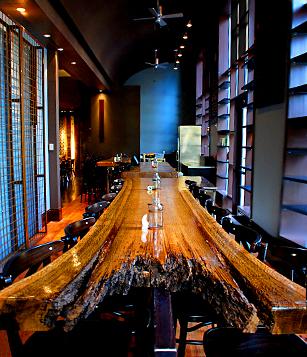
THIS HERE BAR WAS AN OAK TREE THAT FELL IN THE ATLANTA AREA. WE HAD A GUY SLICE US TWO PIECES THAT WERE EACH 4" THICK, 12' LONG AND ABOUT 40" WIDE. WE CUT OFF A PIECE ABOUT 14" WIDE FROM EACH AND I JOINED THEM TO MAKE A THIRD PIECE. I FINISHED THEM AND NOW THEY ARE THE BAR AT L3.


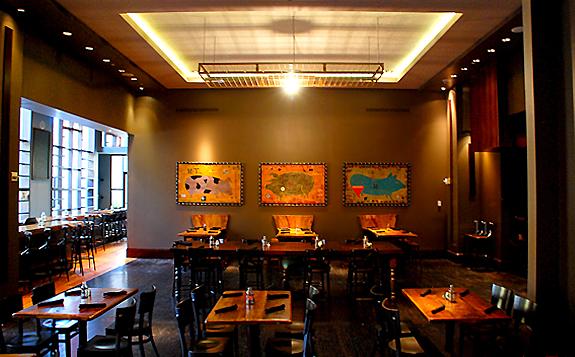
THE THREE PIG PAINTINGS ARE MY WORK AS WELL AS ALL THE TABLE TOPS YOU CAN SEE. THERE ARE MORE YOU DON'T SEE. I DID ABOUT 30 TOPS FROM ANTIQUE PINE FOR L3.


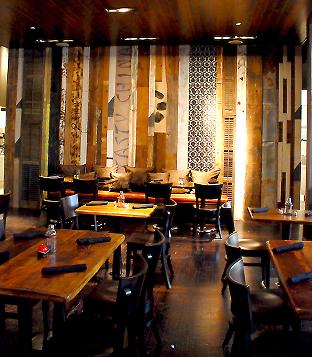
LOCAL THREE WAS RESTAURANT JOEL IN SEPTEMBER 2010. NEXT THING YA KNOW IT IS L3 AND THE ORANGE GLASS TILE WALL JOEL HAD INSTALLED HAD TO GO. THE ORANGE TILE WAS BEAUTIFUL, BUT IT WAS THE SIGNATURE PIECE OF THE JOEL DINNING ROOM. SO I COVERED IT WITH SALVAGED MATERIALS. SHUTTERS, ROOFING TIN, OLD LUMBER ECT. AND MADE IT THE SIGNATURE PIECE OF THE LOCAL THREE DINNING ROOM.

Sunday, January 23, 2011

A BAR CRAWL IN OLD SAN JUAN


Stacey and I have been to San Juan, Puerto Rico. maybe a half dozen times. We like it there. The rooms are cheap, the beach is always nearby and the restaurants are good.

Last time there, we took a taxi to Old San Juan and did a little "bar" crawl.

Stacey and I had mapped out some spots to visit in Old San Juan for our latest trip. We had rented a studio cond across the street from the beach and only about 15 minutes from Old San Juan. We were there for a wedding, but Monday we were free and we wanted to find a few places we had read about. Places to eat and or drink. Old restaurants and hotels we found in magazines and travel books. Places we hoped would not be full of tourist.

We were to meet up with niece and husband Monday a.m. but we had no luck getting them on the phone. Not being able to reach niece on the phone and knowing that niece had danced with the label of "BLACK" the night before at her brothers wedding, we thought she might be hurtin.
So we headed off to a near by spot for a Bloody Mary. It was the worst restaurant and the worst BM I have ever had in my life. The reason we went to this place is cause the day before I looked in the front door when we walked by and thought it might have a nice view. This is what we got for a view. We were able to sit in that window and have a bad drink. With that view. Not bad.


We continued to reach out to niece and husband and finally they called and said "where are you?". We said "at the Hotel El Convento in Old San Juan come on and meet us". And they did. Good times.

Stacey and I were walking through Old San Juan trying to find a tapas bar we had read about. We had read how good and authentic the food was. Just like a tapas bar in Barcelona. When we found the address it was at the Hotel El Convento. When we ask about the tapas bar we were informed it was not open until 5 p.m. It was about 1 p.m. so we ask where we might get a drink and the bellmen told us the bar in the court yard was open and he showed us the way.

This was an awesome place. To start with some guy was playing a classical music on a piano.

We looked around and saw no one. Just the guy playing piano. We walked toward the bar as the bar tender showed up. We ask if he was open, he said he was, we ordered drinks and ask about the hotel we were in. Bar tender handed us a pamphlet, told us to go sit and he would bring our drinks.


Looking through the pamphlet we learned that Hotel El Convento was once a convent.Built in 1651. In 1995 15 million dollars were spent on a renovation. It still looked old to me. Which was a good thing. It had been beautiful restored. Click here and read about all the changes the place went through Between 1651 and 1995. We sat in the bar in the courtyard surround by balconies about 4 stories tall. There were trees in the court and tons of vegetation. We actually met the lady who's job was to take of the plants. She was very proud. The 4 stories of balconies accommodated the guest rooms. Outside each guest door were 4 chairs and a table. Looked like a nice place to have a morning coffee or afternoon cocktail. I really want to go back and spend a couple nights in this hotel. I bet is it haunted with old nuns.

After a couple beers in the courtyard bar we headed out to find La Mallorquina. Founded in 1848 La Mallorquina is advertised at the oldest restaurant to operate nonstop in the same spot in America. Some how we knew we wanted to have a drink here. We had read about it some where. We were greeted by a lovely man who was about 90 years old and 4' tall. He invited us in and he told us about the two lunch specials. We sat at the bar took in the oldness of this place. Straight out of a Humphrey Bogart movie. We had a drink and decided to split one of the lunch specials just to check out the food. It was good. Rice and pork wrapped in a banana leaf. With black beans of course. We had another drink.

We learned the third spot we wanted to visit was no longer open so we though we would walk a while. Old San Juan is great to look at, but soon one feels crowded by all the tourist. So we ducked into the local brew pub.

Thank you, I know smart move. But, a totally different atmosphere. Everything was new. Big open kitchen and they were getting ready for a busy night. There were 3 chefs and they were all hard at work. We did a tasting of about 5 beers. Good stuff. We then left for a meal at Varita.

Varita is one of three restaurants owned by Chef Wilo Benet. I did not know this, but he was on one of the Top Chef series. The place was real cool to look at and the food was good. I had a huge piece of roasted pig. We had lot's of different food and it was all good.
check it out here.

Here are some photos Stacey took. It was a good trip and I can't wait to get back and check out those restaurants on the beach.